
Critical Limb Ischemia
This term describes a condition in which tissues cannot be adequately supplied even at rest due to insufficient flow in the arteries. These patients have pain at rest, ulcers that do not heal for more than 2 weeks, and gangrene of the finger or foot.
Although this diagnosis is basically a clinical diagnosis, it needs to be confirmed by ankle-brachial pressure index (ABI), toe pressure or transcutaneous oxygen pressure. In most developed countries, 50-100/100,000 new patients are diagnosed annually, leading to increased mortality and disability rates.
In the absence of intervention in patients with CLI, 20% of these patients die within 6 months, 40% continue their lives after below-knee or above-knee amputation, and only 40% live a life without amputation. In other words, there is a 60% risk of life or limb loss in a patient diagnosed with CLI. Today, while 15-30% of interventions and surgical procedures are performed for IC, interventions for CLI constitute the vast majority.
Foot ulcers are caused by soft tissue trauma and mild injuries to the skin. In individuals with normal vasculature and without blood flow impairment, these disruptions can be repaired in a healthy way, but in case of impaired blood flow, reduced tissue nutrition, inadequate oxygenation and interruption of cellular proliferation prevent the wounds from healing. In patients without diabetes, these ulcers appear as superficial, non-healing and pale lesions. Patients describe the pain of these wounds as stinging or burning, and these pains are often persistent and resistant even to high doses of painkillers.
Gangrene is a condition that occurs when blood flow is not sufficient for tissue survival, even at rest. It refers to irreversible tissue loss. While ischemia is a reversible clinical condition, necrosis, or gangrene is an irreversible clinical condition. It occurs as a result of tissue nutrition below the limit required for survival. In ischemia, there is usually a problem at a single level, whereas in CLI there is involvement of 2 or more vessels at multiple levels. The resulting pain is not only due to nerve damage caused by malnutrition.Sensory nerve endings, progressive infections and bone inflammations that occur as a result of disruption of the integrity of the skin cause pain, while pain may decrease due to tissue death that occurs in the later stages. This may be considered as a cure by patients and may cause delay in diagnosis and treatment. Patients with such complaints should be urgently evaluated by cardiovascular surgeons.
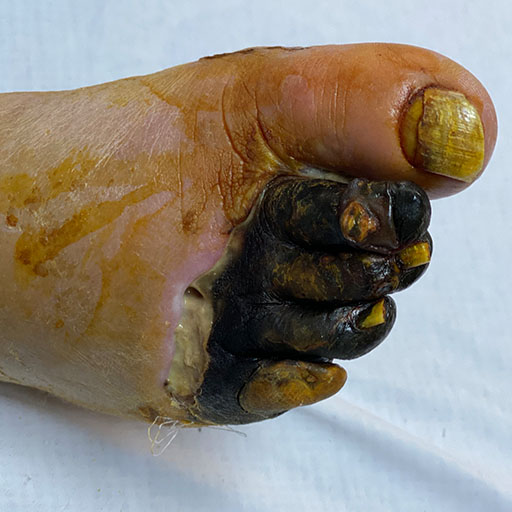
BEFORE RIGHT FOOT
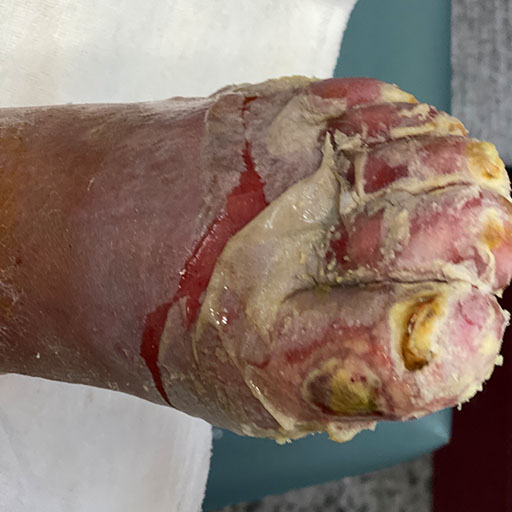
BEFORE LEFT FOOT
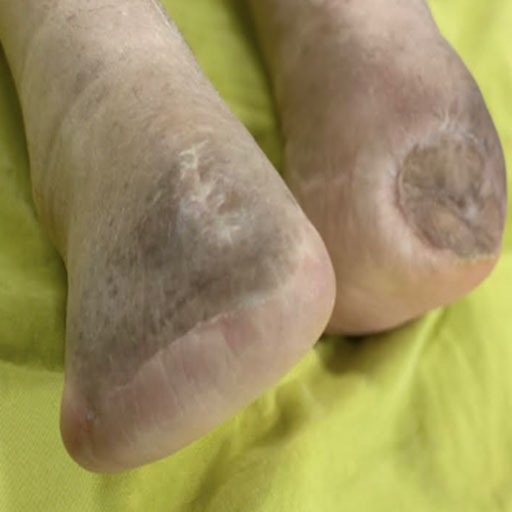
AFTER RIGHT FOOT
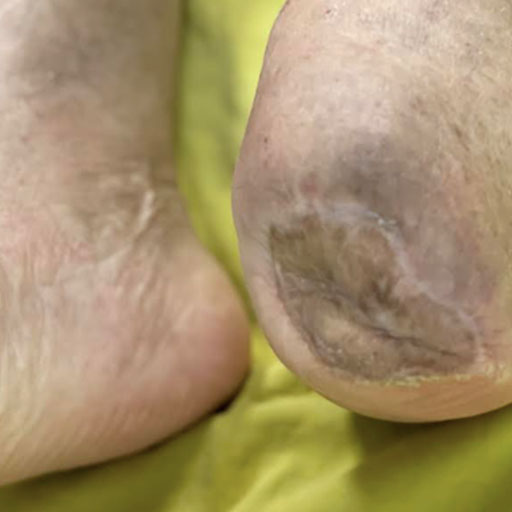
AFTER LEFT FOOT
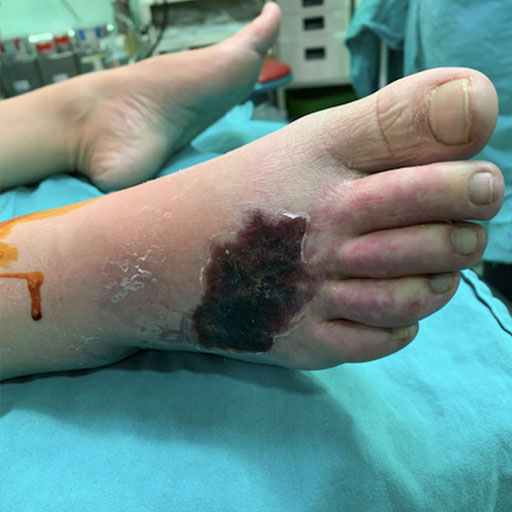
BEFORE
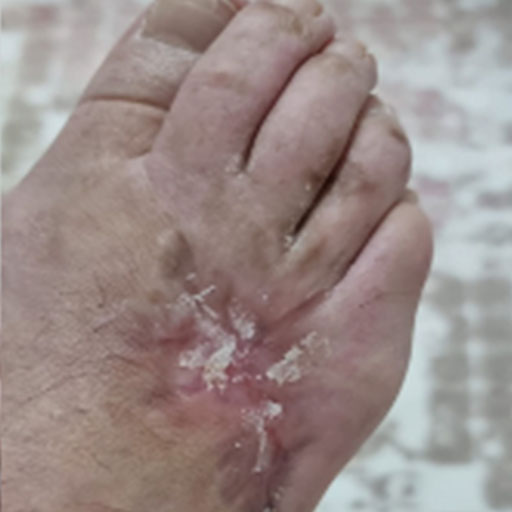
AFTER
CCI is a life-threatening and limb-loss threatening condition. It is necessary to determine the level of the problem and start treatment with the appropriate method without wasting time.
No. It is absolutely necessary to adjust lifestyle or dietary habits at the beginning of the treatment of the disease. However, it is not possible to reverse the condition with these adjustments alone. The condition cannot be corrected with oral vasodilators or antibiotics. The underlying problem is a vascular problem at more than one level and correction of this is the main rule.
Both methods can be used. In appropriate patients, it is necessary to choose the most appropriate method for the patient in order to quickly correct this urgent condition. In some patients, the interventional method is the first choice in order not to waste time, while in some patients surgery is the first choice.