
Diabetic Foot Treatment
Unfortunately, diabetes mellitus (DM) continues to be an important problem in our country as it is all over the world. Why is this disease so important? DM is diagnosed every 5 seconds in the world and a diabetic patient has a heart attack every 15 seconds.
DM is the most common cause of adult blindness and fatal kidney failure. Again, the most common cause of non-traumatic lower extremity loss is diabetes-related vascular problems and infections. Limb loss occurs every 20 seconds worldwide due to complications of diabetes. According to WHO (World Health Organization) data, there are currently 442 million diabetic patients in the world and this number is expected to increase to over 600 million in 2035.
Diabetic foot (DA) roughly refers to wounds on the feet of diabetics that do not heal. Patients with DM have a 15-25% chance of developing a foot ulcer (wound) through their lives. Diabetic foot ulcers (DFUs) are of particular importance because 85% of major (below the knee and below the knee) and 85% of minor lower limb amputations due to DM are triggered by an ulcer. Again, the risk of amputation in patients with DM is 15-30 times higher than in those without DM. Half of limb losses occur below the knee or at the knee level and half at the finger and toe level. Approximately 25% of DM patients develop at least 1 DFU in their lifetime. These ulcers are also important as a trigger mechanism for infection and amputation. The DFU becomes infected 50-70% of the time and unfortunately 20% of these progress to amputation.
There are multiple factors in the development of Diabetic Foot Ulcers.
1. Autonomic, sensory and motor neuropathy
2. Vascular problems
3. Abnormal foot mechanics
4. Structural foot deformities
5. Trauma
6. Use of inappropriate footwear
Half of DAU are neuropathic ulcers. In other words, sensory and functional impairment has developed due to neuropathy. While ischemia (malnutrition due to vascular occlusion) is responsible for about 25%, the other 25% are neuro-ischemic ulcers (both nerve and vascular involvement). Structural defects in the foot and disorders in joint movements also cause abnormalities in the pressure distribution on the sole of the foot, leading to ulcer formation. Therefore, about half of patients with DAU have a vascular problem. Terminology is sometimes misused to make it easier for the public to understand. Below-knee arterial occlusion is sometimes referred to as capillary occlusion, which is absolutely wrong.
The microvascular (capillary level) complications of diabetes are nephropathy (kidney involvement), retinopathy (involvement of the retina in the eye) and peripheral neuropathy (nerve involvement). Contrary to popular belief, although vascular involvement in diabetes can also occur at the microvascular level (at the capillary level), it is more at the macrovascular level (i.e. the larger diameter vessels below the knee). Therefore, correcting problems at the level of large vessels contributes to increased blood flow in the wound area, contributing to more physiological and healthier tissue repair.
One of the most common mistakes made during the treatment of foot wounds in diabetics is to start treatment without evaluating the vascular structure !!! If there is an occluded or stenosed artery, there will not be enough blood supply to the wound area, antibiotic agents given due to infection will not reach this area in an amount that will be effective. Let me give you an example; cutting a finger that has gone gangrenous due to vascular occlusion and closing the wound usually causes the gangrene area to progress, so patients are subjected to repeated amputations. This is because there is not enough blood flow to allow tissue healing due to vascular occlusion in the area that is sutured and closed after amputation. Performing these procedures after restoring the blood supply will prevent further tissue loss and will provide a faster wound healing.
A similar mistake is the oral antibiotics prescribed to patients without a circulatory examination. In order for antibiotics to act on the bacteria in the infected area and help eliminate the infection, they must be present in the tissue in certain amounts. So the tissues must be supplied with blood by an intact circulatory system at the appropriate pressure. Otherwise, the antibiotics given will not have the expected effect, side effects will occur, and resistance to the antibiotics will develop. After the blood supply process is done, the responses to intravenous or oral medications are much better.
There is no certain algorithm to be followed in the treatment of foot wounds due to diabetes. Treatments should be done simultaneously. In fact, diabetic foot is a disease that requires a multidisciplinary approach and should be performed by people experienced in this field. Vascular diagnosis and evaluation, debridement of the wound, triggering granulation, infection control and wound closure should be carried out together. Therefore, evaluating the vascular structures of patients with diabetes-related wounds at the beginning of treatment and providing diagnosis and treatment will both prevent limb loss and provide treatment in shorter periods.
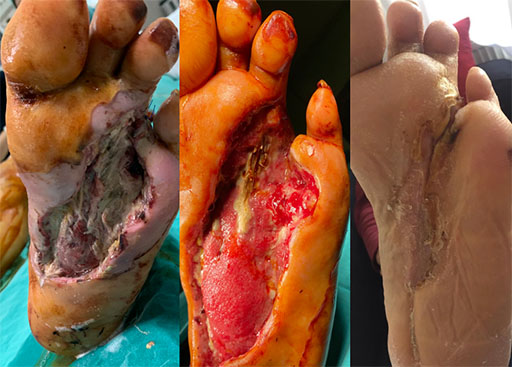
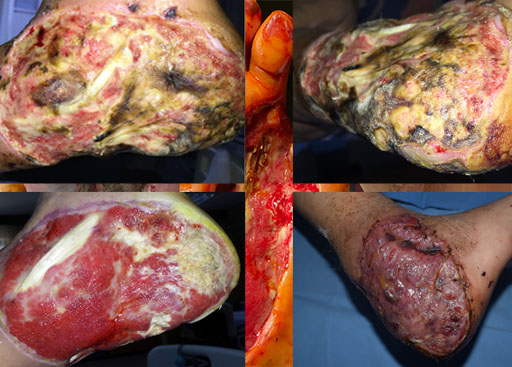
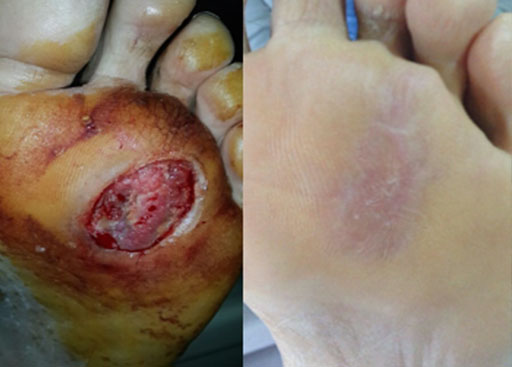
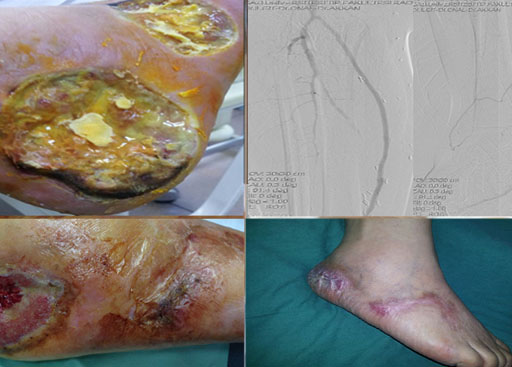
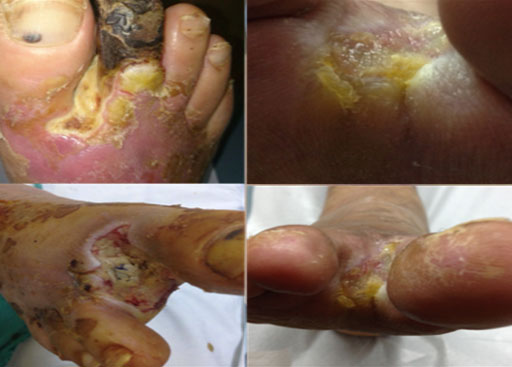
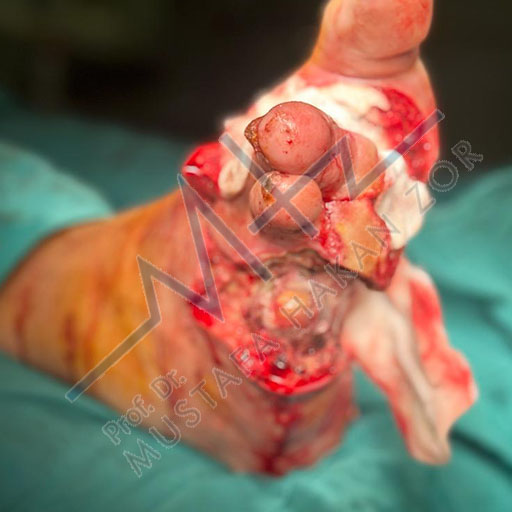
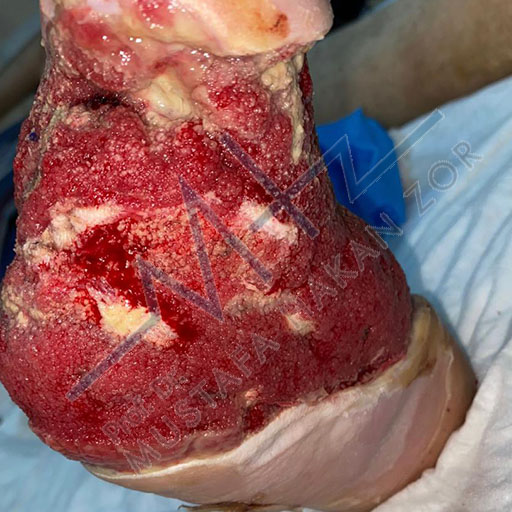
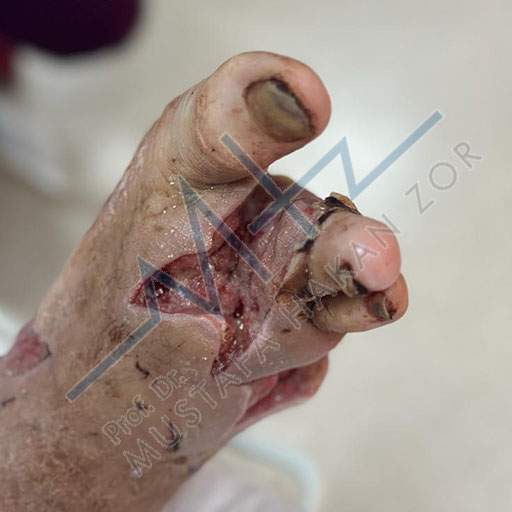
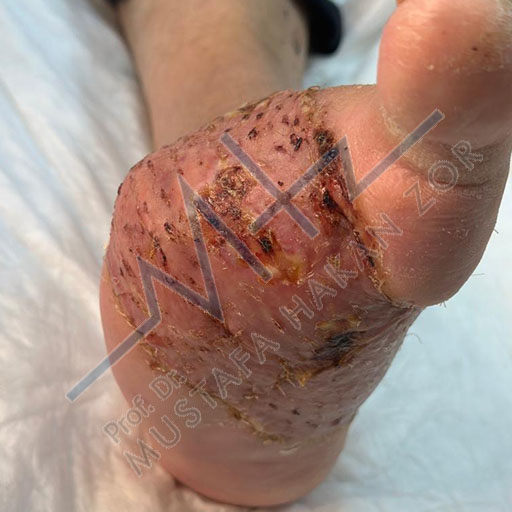
For diabetics, even very small wounds on the feet that seem insignificant can cause very serious conditions, as shown in the picture on the right. Once you realize that you have a wound on your foot, you should consult a specialist as soon as possible. Remember that the wound on the side started with a wound the size of a pinhead.
If you do not consult a specialist until your foot becomes like this, unfortunately, the result may result in amputation.
For some simple wounds, the answer is yes. These wounds can be treated with the use of the right products. However, as we have mentioned before, the first thing to do is to evaluate the blood supply to the foot and then decide on the continuation of the treatment. Performing the procedures in the treatment algorithm simultaneously will both save time and prevent limb loss.
Imagine planting a flower in your own garden. If you do not water it, it will dry up, it will not grow. If there is a bleeding problem in the wound on your foot, surgical procedures performed in this area will cause the wound to grow or the cut finger / foot area to dry and the wound to grow or the foot / toe to be cut from a higher level again. A wound without blood supply does not heal.